
 0
0

There are 0 items in your cart: Cart Subtotal: $ 0.00
A District Under State Takeover Just Earned Its First-Ever A Rating After Seven Consecutive F Ratings

 The K12 Marketplace
  0
0
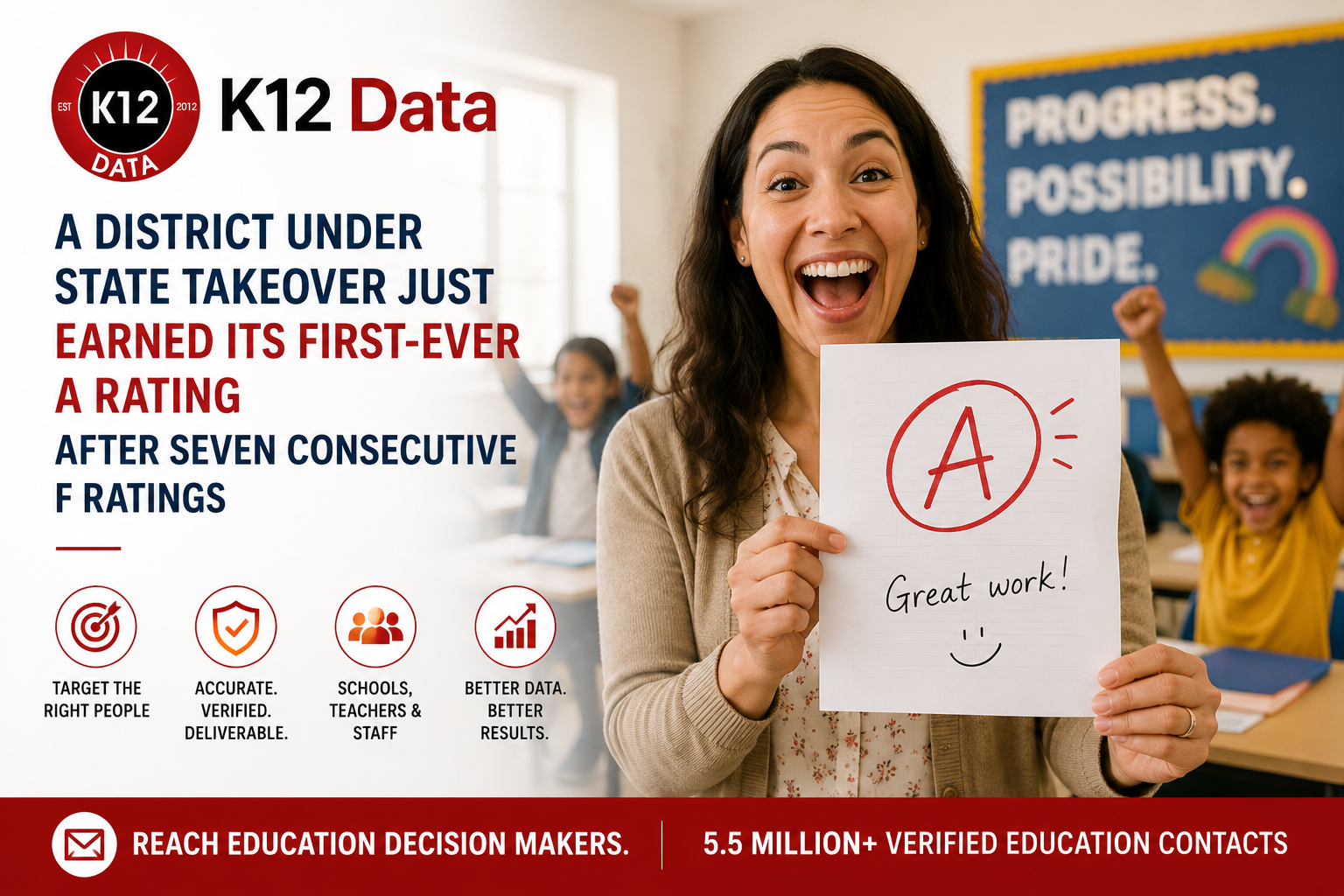
Three years into a state takeover, one of a district's most troubled schools has risen from seven consecutive F ratings to its first-ever A, a genuine turnaround success story.
A District Under State Takeover Just Earned Its First-Ever A Rating After Seven Consecutive F Ratings
A genuinely remarkable turnaround deserves direct attention from district leadership navigating their own school improvement challenges. Three years into a state takeover, one of a Houston-area district's most troubled schools has risen from seven consecutive F ratings to its first-ever A rating. This represents concrete, measurable proof that sustained, well-structured intervention can produce genuine academic transformation, not simply incremental improvement districts and communities often settle for after years of persistent underperformance.
For district leadership managing their own struggling schools, and for state education agencies overseeing intervention efforts, this turnaround offers a genuinely instructive case study worth understanding directly, both for what specific interventions likely drove this result and for what it demonstrates about realistic timelines for meaningful academic transformation.
Why This Turnaround Matters Beyond One School
Schools receiving seven consecutive F ratings represent genuinely persistent, structural underperformance that simple, incremental interventions typically fail to address meaningfully. A school moving from this level of sustained struggle to an A rating within a three-year window demonstrates that genuine transformation remains achievable even for schools many observers might have written off as facing intractable challenges beyond meaningful intervention.
This matters considerably for the broader conversation about school accountability and state intervention specifically, since critics of state takeover models often argue these interventions produce disruption without genuine academic benefit, while supporters point to exactly this kind of measurable outcome as evidence the model can work when implemented thoughtfully and sustained over a genuinely adequate timeline for real change to take hold.
What Likely Drove This Specific Transformation
While the full scope of intervention strategies employed likely spans curriculum changes, staffing decisions, and instructional support investments, transformations of this magnitude typically require genuine, sustained investment across multiple dimensions simultaneously, rather than any single intervention producing this scale of academic improvement independently. Schools achieving this kind of turnaround generally combine strengthened instructional leadership, targeted professional development for existing staff, and genuine additional academic support resources for students who had fallen considerably behind grade-level expectations across multiple consecutive years of underperformance.
"Three years into Texas' takeover of the district, one of its most troubled schools has risen from seven consecutive F ratings to its first-ever A."
This three-year timeline itself offers genuine insight for district and state leadership evaluating their own intervention strategies, since it suggests meaningful transformation, while achievable, generally requires sustained commitment across multiple full academic years rather than the kind of single-year turnaround pressure that sometimes characterizes public expectations around school intervention efforts.
What This Means for Districts Managing Their Own Struggling Schools
District leadership overseeing schools facing persistent, multi-year underperformance should recognize this specific outcome as genuine evidence that sustained, well-resourced intervention can produce real transformation, even for schools with genuinely difficult historical performance patterns. This should inform both intervention strategy and, importantly, communication with school communities and staff who may have grown understandably skeptical of improvement initiatives after previous, less successful intervention attempts.
Districts should also recognize that this kind of transformation requires genuine patience and sustained resource commitment extending across multiple years, rather than treating a single year without dramatic improvement as evidence that intervention efforts have failed and require an entirely different approach, when a genuinely sound strategy may simply require additional time to fully demonstrate results at the scale this specific school achieved.
What This Means for State Education Policy
State education agencies overseeing intervention and takeover programs have genuine reason to study this specific case closely, both to understand which particular strategies proved most effective and to build a more concrete, evidence-based case for continued investment in intervention models that critics sometimes characterize as producing disruption without commensurate academic benefit. This kind of measurable, dramatic outcome offers state policymakers genuinely compelling evidence to support continued or expanded intervention program funding.
State agencies should also consider how this specific district's approach might inform intervention strategy for other struggling schools within the same state, recognizing that while every school's specific circumstances differ, the underlying principles driving this successful transformation, sustained investment, strengthened leadership, and genuine patience across a multi-year timeline, likely offer transferable lessons relevant beyond this single school's specific situation.
A Concrete Scenario Worth Walking Through
Consider a district considering whether to continue funding an intervention program at a different struggling school after two years without dramatic visible improvement, facing genuine internal pressure to declare the current approach unsuccessful and pivot toward an entirely different strategy. This Houston-area case offers direct, relevant evidence worth weighing seriously in that decision: meaningful transformation from persistent, multi-year underperformance to genuine excellence took a full three years to fully materialize, suggesting that abandoning a fundamentally sound intervention strategy after only two years, before it has had adequate time to demonstrate its full potential, could mean sacrificing exactly the kind of dramatic improvement this specific school ultimately achieved.
This does not mean every intervention deserves indefinite patience regardless of genuine warning signs suggesting a fundamentally flawed approach. But district leadership evaluating their own intervention timelines should weigh this specific case as a genuine data point suggesting that three years, not one or two, may represent a more realistic minimum timeline for evaluating whether a sound, well-resourced intervention strategy is actually working, rather than making premature strategic pivots based on insufficient time for genuine transformation to fully take hold.
Why Staff and Community Buy-In Matters Throughout the Process
Transformations of this magnitude typically require genuine, sustained buy-in from school staff and the broader community throughout a multi-year process where visible results may not emerge immediately, even when the underlying intervention strategy is fundamentally sound. Communities and staff who have experienced previous, less successful improvement efforts may reasonably approach a new intervention with genuine skepticism, and school and district leadership need to actively manage this skepticism through honest, consistent communication about the intervention's actual progress, including genuine setbacks alongside encouraging signs, rather than either overselling early progress or allowing community skepticism to undermine sustained commitment to a strategy that may simply need additional time to fully demonstrate results.
Districts navigating comparable intervention efforts should invest genuine communication resources specifically addressing this challenge, helping staff and families understand realistic timelines for meaningful transformation while maintaining genuine transparency about progress and setbacks throughout the actual multi-year improvement process this Houston-area school's own turnaround required to reach its ultimately successful outcome.
A Broader Pattern of Institutions Achieving Genuine Turnarounds This Year
This dynamic, genuine measurable transformation resulting from sustained, well-structured investment, is showing up across sectors this year. Higher education is facing a related turnaround story too, since one university saved previously doomed programs by making them more efficient. Healthcare is navigating a related trust and technology gap too, since 79 percent of independent practices say technology keeps them independent, but only 64 percent trust their own tools.
Government agencies are seeing a related proactive capability shift too, since California just launched a statewide AI cyber defense program, offering a new model for protecting local governments. And K-12 hiring reflects a related growth story too, since teacher apprenticeship programs are now the top degree apprenticeship category in the country.
A district school moving from seven consecutive F ratings to its first-ever A rating within three years of state takeover represents genuine, measurable proof that sustained, well-structured intervention can produce real academic transformation. District and state leadership studying this specific case, and recognizing the genuine patience and multi-year commitment such transformation requires, are positioned to approach their own school improvement efforts with considerably more confidence than the broader, often skeptical conversation around school intervention outcomes might otherwise suggest.
Ready to reach the district leaders driving genuine school turnaround success? Build a verified K-12 database, or buy a school email list, with K12 Data today.