
 0
0

There are 0 items in your cart: Cart Subtotal: $ 0.00
A House Hearing Just Declared AI Teacher Training a Must, and It's Reshaping Professional Development Budgets

 The K12 Marketplace
  0
0
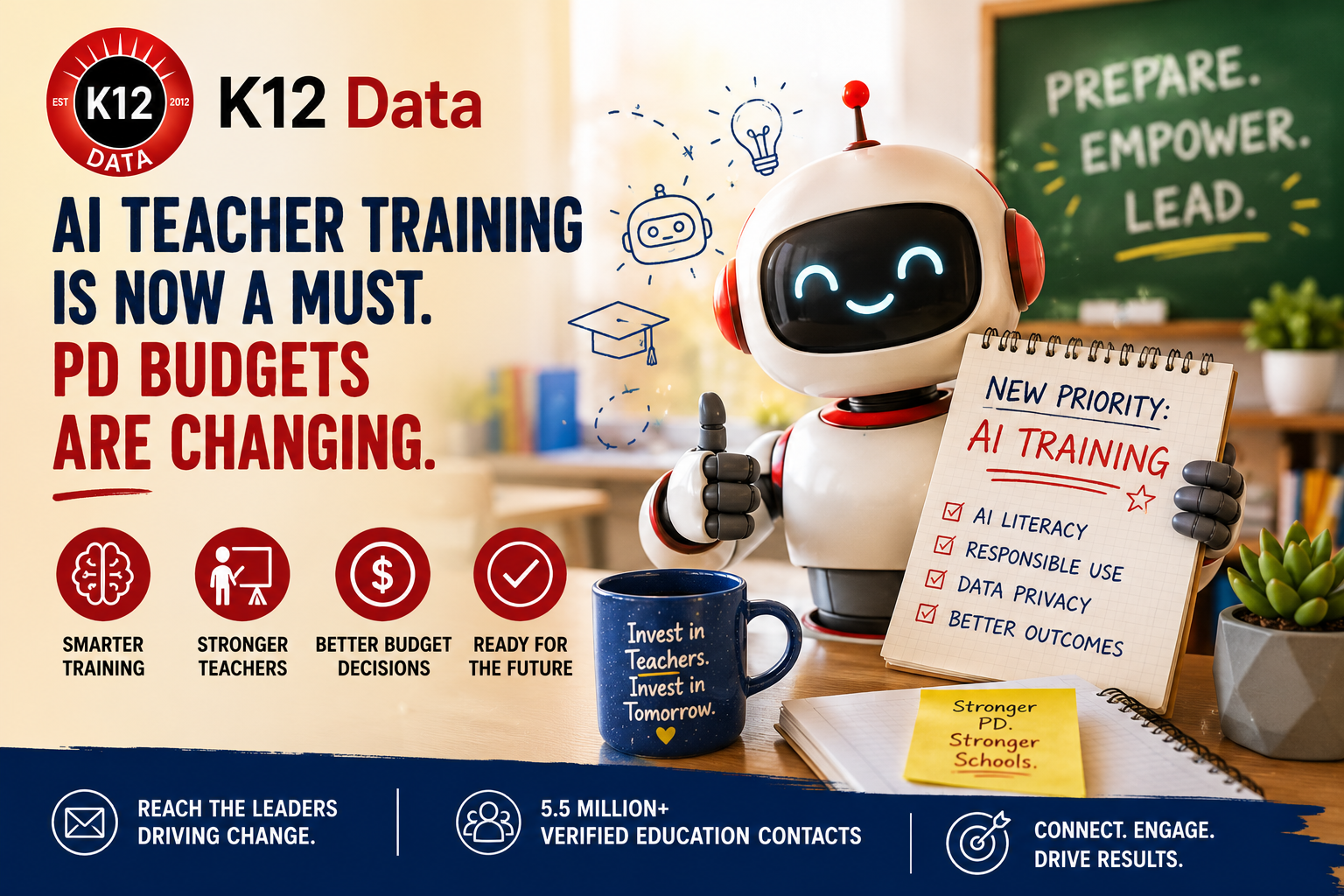
A recent House hearing stressed that AI teacher training is now a must, creating genuine urgency for districts to redirect professional development budgets toward AI fluency.
A House Hearing Just Declared AI Teacher Training a Must, and It's Reshaping Professional Development Budgets
A genuinely significant shift in federal education priorities deserves direct attention from district professional development leadership. A recent House hearing stressed that AI teacher training is a must, reflecting growing bipartisan recognition that classroom AI adoption has outpaced the professional development infrastructure most districts have built to support it. This represents a meaningful signal that AI fluency training is moving from a nice-to-have enrichment offering toward genuinely essential, expected professional development infrastructure districts need to prioritize directly.
For district curriculum and professional development leadership, this hearing offers genuine validation for redirecting budget and attention toward AI training specifically, at a moment when many districts have already found themselves managing AI adoption in classrooms considerably faster than formal training structures have kept pace.
Why This Hearing Matters Beyond a Single Policy Discussion
Congressional hearings addressing K-12 technology policy do not always translate into concrete funding or mandate changes, but this specific hearing's emphasis on AI teacher training reflects a genuine, bipartisan recognition that classroom-level AI use has already outpaced the formal training infrastructure most districts currently maintain. Teachers report using AI in their work at considerably higher rates than just a few years ago, yet formal, structured training addressing this specific technology has not kept pace with actual classroom adoption in many districts nationally.
This gap between actual AI use and formal training creates genuine risk, since teachers using AI tools without adequate training may not fully understand appropriate use boundaries, data privacy considerations, or pedagogically sound integration approaches, precisely the kind of gap this hearing's emphasis on mandatory training aims to address directly.
What Genuine AI Teacher Training Actually Requires
Districts responding to this shift need training that goes considerably beyond a single introductory session covering basic AI tool functionality. Genuine AI teacher training requires ongoing, structured professional development addressing pedagogically sound AI integration, data privacy and student safety considerations specific to AI tools, and practical guidance helping teachers distinguish between AI use that genuinely enhances instruction and AI use that risks substituting for genuine pedagogical judgment and human connection with students.
"House hearing stresses that AI teacher training is a must."
This kind of comprehensive training requires genuine budget investment beyond what many districts have allocated toward AI-specific professional development to date, and districts need to treat this hearing's emphasis as a signal to reassess whether current professional development budget allocation adequately reflects how central AI fluency has become to effective, responsible classroom practice.
Why Instructional Coaches Need Genuine AI-Specific Support
Instructional coaches and technology integration specialists, the staff most directly responsible for supporting teachers through this kind of training, need genuine AI-specific expertise themselves before they can effectively support classroom teachers navigating this technology. Districts should evaluate whether their own instructional coaching staff have received adequate AI-specific training and support, rather than assuming existing instructional coaching expertise automatically transfers effectively to this genuinely new, rapidly evolving technology area.
This creates real, near-term demand for train-the-trainer models specifically addressing AI integration, building genuine internal capacity among instructional coaches and technology specialists who can then support classroom teachers directly, rather than districts relying exclusively on external training resources for every individual teacher's ongoing AI-specific professional development needs.
What This Means for District Budget Planning
District leadership evaluating upcoming professional development budget cycles should treat this hearing's emphasis as genuine validation for prioritizing AI-specific training investment, even amid broader budget pressure many districts continue navigating. This does not necessarily require dramatically expanding overall professional development budgets, but may require genuine reallocation toward AI-specific training from other professional development priorities that may have historically received more consistent budget attention.
Districts should also consider how this shift affects vendor and partnership evaluation specifically, since professional development vendors and platforms genuinely capable of providing substantive, pedagogically sound AI training represent a meaningfully different offering than general technology training vendors who may be adding AI-related content without the same depth of genuine AI-specific pedagogical expertise this moment increasingly requires.
A Concrete Scenario Worth Walking Through
Consider a district where individual teachers have independently begun using AI tools for lesson planning, drafting parent communications, and even generating assessment questions, without any formal district guidance or training addressing appropriate use boundaries, data privacy considerations for student information potentially shared with AI tools, or genuine pedagogical best practices for AI integration specifically. This scenario, playing out in some form across many districts nationally, illustrates precisely the gap this House hearing's emphasis on mandatory training aims to address: teachers are already using this technology extensively, but largely without the structured guidance that would help them use it more safely and effectively.
District leadership discovering this kind of informal, ungoverned AI adoption already underway within their own schools should treat this as genuine urgency to build formal training and guidance quickly, rather than continuing to allow AI use to develop entirely informally without district-level pedagogical and safety guidance. This hearing's emphasis offers genuine institutional cover and justification for districts needing to make this case to school boards and finance committees who might otherwise view AI-specific professional development as a discretionary addition rather than genuinely necessary infrastructure investment.
Why Data Privacy Training Deserves Specific Attention
Beyond general pedagogical integration guidance, teachers need specific, genuine training addressing what student information can and cannot appropriately be shared with AI tools, since many popular AI platforms were not originally designed with the same student data privacy protections educational technology tools specifically built for K-12 use typically incorporate. Teachers using general-purpose AI tools for tasks involving student work or information without understanding these specific privacy considerations risk genuine student data privacy violations that could carry real legal and reputational consequences for their district.
This privacy-specific training component deserves genuine, dedicated attention within any comprehensive AI training program, distinct from general pedagogical integration training, since the specific legal and ethical considerations around student data privacy require genuinely specialized expertise many general AI training resources may not adequately address with the depth K-12's specific student privacy obligations actually require.
A Broader Pattern of Institutions Formalizing AI Adoption This Year
This dynamic, institutions moving from informal, ad hoc AI adoption toward genuine, structured investment, is showing up across sectors this year. Higher education is facing a related shift too, since universities moving from AI pilots to whole-institution deals is reshaping how vendors sell. Healthcare is navigating a related adoption surge too, since physician AI adoption just jumped from 47 percent to 63 percent in under a year, with ambient documentation driving it.
Government agencies are seeing a related regulatory model emerge too, since Utah just became the first state to let patients refill prescriptions via AI, offering a new model for government-regulated healthcare technology. And K-12 hiring reflects a related AI adoption shift too, since more than half of district recruiters are now using AI to hire teachers, and most candidates have no idea.
A House hearing explicitly declaring AI teacher training a must represents genuine, bipartisan validation for districts to prioritize this training investment directly, closing the gap between actual classroom AI adoption and the formal training infrastructure most districts have built to support it. Districts reallocating professional development budget toward genuine, comprehensive AI training, and building internal instructional coaching capacity specifically for this technology, are positioned to close this gap considerably more effectively than districts continuing to treat AI training as a lower-priority addition to existing professional development structures.
Ready to reach the professional development leaders driving this budget shift? Build a verified K-12 database, or buy a school email list, with K12 Data today.