
 0
0

There are 0 items in your cart: Cart Subtotal: $ 0.00
Districts Are Expanding Cellphone Bans to Specifically Target AI Smart Glasses

 The K12 Marketplace
  0
0
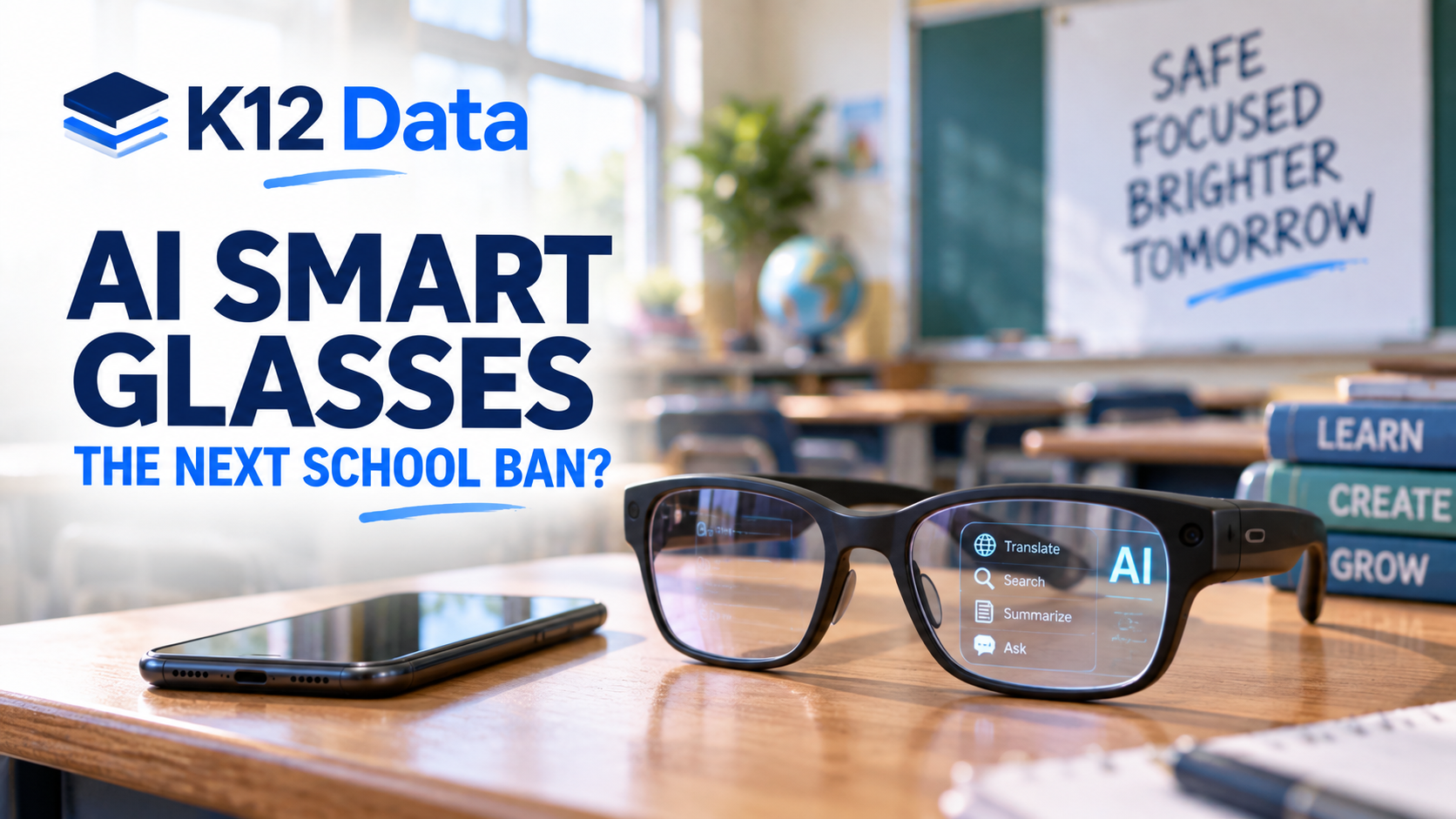
Districts are expanding existing cellphone bans to specifically address AI-enabled smart glasses, a genuinely new category of classroom technology policy makers need to understand directly.
Districts Are Expanding Cellphone Bans to Specifically Target AI Smart Glasses
A genuinely fast-moving policy adaptation deserves direct attention from district leadership managing student technology use. Districts are expanding existing cellphone bans specifically to address AI-enabled smart glasses, a device category that did not exist in any meaningful consumer form when most current cellphone ban policies were originally written. For administrators managing student conduct and technology policy, this represents a genuinely urgent gap many existing policies were not built to address.
For district technology and student conduct leadership, this expansion offers genuine, immediate insight into how quickly emerging consumer technology can outpace existing school policy frameworks, and what districts should actually do about it before this gap creates real, practical enforcement problems.
Why Smart Glasses Create a Genuinely Different Policy Challenge
AI-enabled smart glasses present a meaningfully different enforcement challenge than traditional cellphones, since they are designed to be worn continuously and often look similar enough to ordinary eyewear that visual identification alone may not reliably distinguish a student wearing genuine prescription glasses from a student wearing AI-enabled smart glasses capable of recording, searching, or otherwise assisting during instructional time or assessments.
This visual ambiguity creates genuine, practical enforcement difficulty existing cellphone policies, built around a device category that is easily visually identified and typically stored away rather than worn, simply were not designed to address. Districts recognizing this gap are right to treat it as a genuinely distinct policy challenge rather than assuming existing cellphone language adequately covers this new device category by extension.
What Districts Actually Need to Update in Their Policies
"Districts Expand Cellphone Bans to Target AI Smart Glasses. Why It Matters."
Districts should review their current technology and device policies directly to determine whether smart glasses and similar wearable AI devices are explicitly addressed, rather than assuming general language about "electronic devices" or "cellphones" adequately covers this genuinely distinct device category. Explicit, specific policy language addressing wearable AI devices gives administrators and teachers considerably clearer grounds for enforcement than relying on broader language that may not have contemplated this specific technology when originally written.
This policy update should also address genuinely practical enforcement questions smart glasses raise specifically, including how staff should reasonably distinguish suspected smart glasses from ordinary prescription eyewear, and what specific consequences apply when a violation is identified, since enforcement mechanisms designed around confiscating and storing a cellphone may not translate directly to a wearable device students may reasonably need functional access to throughout the school day for actual vision correction.
Why This Matters Beyond Academic Integrity Concerns
While academic integrity during assessments represents an obvious concern smart glasses raise directly, districts should also consider genuine student privacy implications, since smart glasses capable of recording or capturing images create real potential for other students' privacy to be violated without their knowledge or consent during ordinary classroom interactions. This privacy dimension deserves genuine, direct attention in policy language, not simply as an assessment integrity issue but as a broader student privacy and safety consideration extending throughout the school day.
Districts should also consider genuine implications for staff and visitor interactions specifically, since smart glasses capable of recording conversations or capturing images create privacy considerations extending beyond student-to-student interactions into student interactions with teachers, staff, and campus visitors throughout normal school operations.
What Genuine Enforcement Requires Beyond Policy Language
Districts should invest in genuine staff training specifically addressing this new device category, since teachers and staff need practical, concrete guidance for identifying and appropriately addressing suspected smart glasses use, distinct from the more familiar cellphone enforcement patterns staff have developed over years of managing that specific device category. This training should address genuine, practical scenarios staff are likely to encounter, rather than assuming staff can intuitively apply existing cellphone enforcement approaches to this meaningfully different device category without specific guidance.
Districts should also build genuine, clear communication with families about this policy expansion specifically, since families purchasing smart glasses for their children, whether for genuine vision correction needs or general consumer technology interest, need clear understanding of school policy before a violation creates unnecessary conflict or confusion about what students can and cannot bring to school.
Why This Reflects a Broader Pattern Worth Watching
This specific policy adaptation likely represents an early example of a broader pattern districts should expect to continue, since consumer AI-enabled wearable technology will likely continue evolving into new device categories existing school policy frameworks have not yet contemplated. Districts should build genuine, ongoing policy review processes specifically anticipating this pattern, rather than treating each new device category as requiring an entirely reactive policy response only after the technology has already become genuinely widespread among students.
A Concrete Scenario Worth Walking Through
Consider a classroom teacher administering a written assessment, noticing a student wearing glasses with a slightly unusual frame design, but genuinely uncertain whether this represents ordinary prescription eyewear or AI-enabled smart glasses potentially capable of assisting the student during the assessment itself. Without explicit district policy and specific staff guidance addressing exactly this scenario, this teacher faces a genuinely difficult judgment call, one that risks either wrongly accusing a student of academic dishonesty based on ordinary eyewear, or allowing genuine assessment integrity violations to continue unaddressed simply because the teacher lacked clear protocol for handling this specific, ambiguous situation.
This scenario illustrates precisely why explicit policy language and specific staff training matter so directly and practically, since teachers facing this kind of ambiguous situation without clear guidance are placed in a genuinely difficult position regardless of which way they ultimately decide to handle it. Districts should provide teachers with specific, practical protocol for exactly this kind of scenario, including clear guidance about what questions staff can appropriately ask a student and what steps should follow if genuine concern about smart glasses use during an assessment specifically arises.
Why Districts Should Coordinate With Peer Districts on This Issue
Given how genuinely new this specific policy challenge is, districts have real opportunity to learn from peer districts who have already begun developing policy language and enforcement approaches specifically addressing smart glasses, rather than each district developing this kind of policy entirely independently without benefiting from other districts' already-accumulated experience with this same emerging challenge. Districts should actively seek out and share specific policy language and enforcement lessons through regional consortiums, state administrator associations, or informal peer district networks.
This kind of peer coordination matters considerably given how quickly this specific technology category is evolving, since districts sharing genuine, practical lessons about what enforcement approaches are actually working, and where genuine ambiguity or difficulty persists despite good-faith policy efforts, helps the broader K-12 sector develop more effective policy considerably faster than each district working through this challenge in complete isolation from comparable peer district experience.
Frequently Asked Questions
Are AI smart glasses allowed in schools?
This depends entirely on each district's specific policy. Many districts are now updating existing cellphone bans to explicitly address AI-enabled smart glasses, since general "electronic device" language written before this technology existed often does not clearly cover it. Families should check their specific district's current technology policy directly rather than assuming smart glasses fall under the same rules as ordinary eyewear.
How do districts actually enforce a smart glasses ban?
Enforcement typically requires explicit policy language identifying wearable AI devices as a distinct category, paired with staff training on how to reasonably identify suspected smart glasses and what steps to take when a violation is suspected. Districts without this specific guidance often struggle with enforcement, since smart glasses can visually resemble ordinary prescription eyewear.
What is the difference between a cellphone ban and a smart glasses ban?
A cellphone ban addresses a device that is easily identified and typically stored away during the school day. A smart glasses ban addresses a wearable device that may be difficult to visually distinguish from ordinary eyewear and is designed to be worn continuously, requiring genuinely different policy language and enforcement approaches than traditional cellphone rules.
A Broader Pattern of Institutions Adapting to Genuine Change This Year
This dynamic, institutions adapting existing frameworks to address genuinely new challenges, is showing up across sectors this year. Higher education is seeing a related positive trend too, since colleges are crediting K-12 partnerships and enrollment data analysis for the 2026 enrollment wins. Healthcare is facing a related coding update too, since the AMA just released 299 new CPT codes for 2027, and 10 of them are specifically for AI.
Government agencies are seeing a related accountability test too, since what happened when Utah actually tested ed-tech privacy promises offers a genuine lesson for other states. And K-12 hiring reflects a related insight too, since district recruiters reveal what actually makes a strong teacher hire.
Districts expanding cellphone bans to specifically address AI smart glasses represents genuine, necessary policy adaptation to a device category existing frameworks were not built to address. Districts updating policy language explicitly, training staff on practical enforcement, and communicating clearly with families are positioned to navigate this emerging device category considerably more effectively than districts assuming existing cellphone policy language adequately extends to this meaningfully different technology.
Ready to reach the district policy leaders navigating this emerging technology challenge? Build a verified K-12 database, or buy a school email list, with K12 Data today.