
 0
0

There are 0 items in your cart: Cart Subtotal: $ 0.00
Ransomware Attacks Just Dropped 26 Percent, While Higher Ed Attacks Keep Climbing

 The K12 Marketplace
  0
0
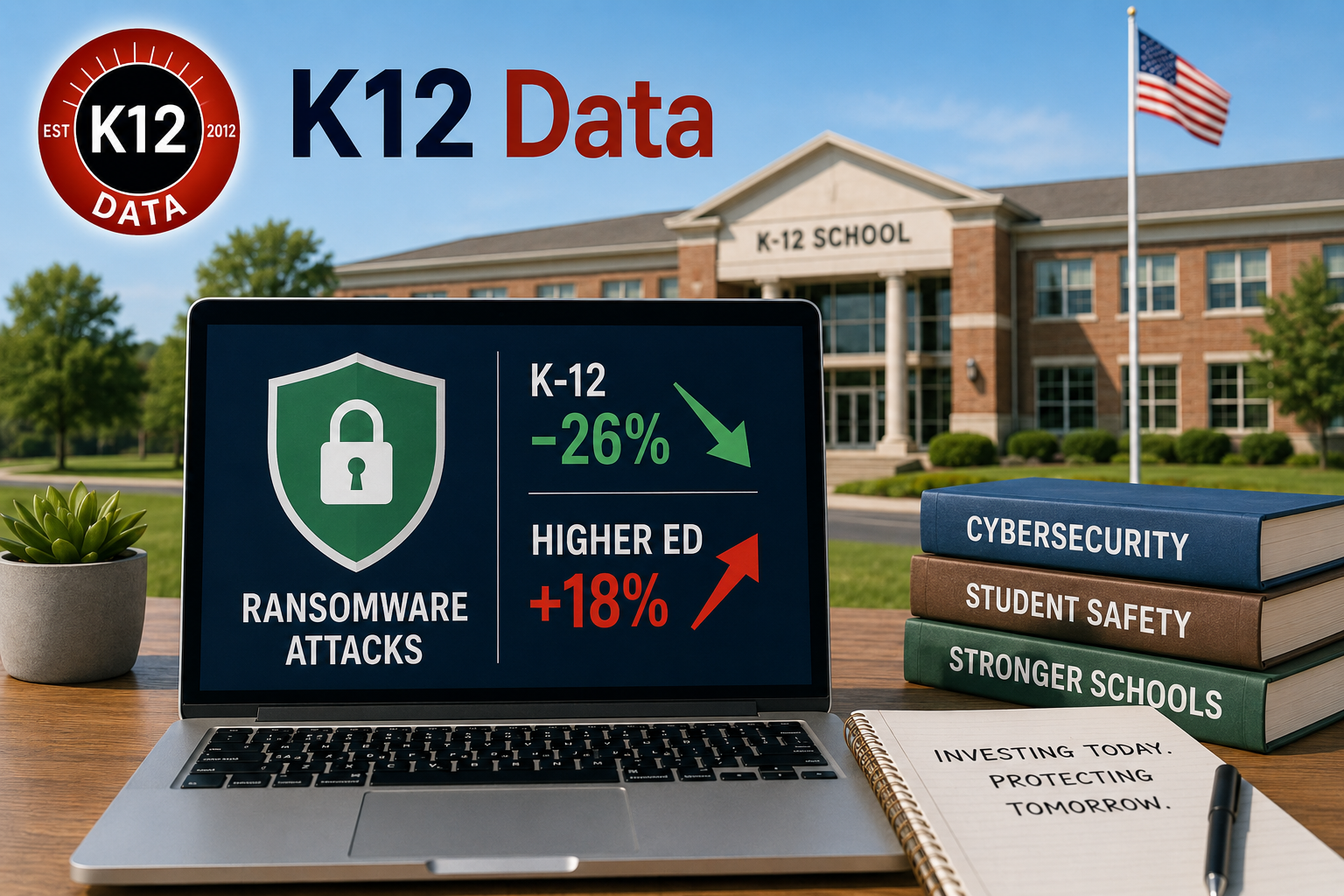
K-12 ransomware attacks declined 26 percent in the first half of 2026 even as higher education attacks increased, a genuine sign that district cybersecurity investment is paying off.
K-12 Ransomware Attacks Just Dropped 26 Percent, While Higher Ed Attacks Keep Climbing
A genuinely encouraging trend deserves direct attention from district technology leadership. Ransomware attacks on K-12 schools worldwide declined 26 percent in the first half of 2026 compared to the latter half of 2025, according to new Comparitech data, while attacks on higher education institutions increased by more than 8 percent over the same period. This is a real, measurable signal that the sustained cybersecurity investment districts have made over the past several years is producing genuine results, even as a comparable sector faces a worsening threat environment.
For district technology directors and vendors serving this space, this divergence is worth understanding directly, both as validation of a genuinely difficult multi-year investment and as a signal about what is actually working in practice.
Why K-12 Districts Are Pulling Ahead
Districts have spent the past several years building genuine cybersecurity infrastructure in response to a wave of high-profile incidents affecting student information systems and district operations, investments that included phishing prevention training, network segmentation, and dedicated cybersecurity staff or vendor partnerships many districts had not previously maintained. This sustained investment appears to be producing exactly the kind of measurable result districts and their boards have been hoping to see after years of budget allocation toward a threat that, until recently, seemed to only be worsening regardless of investment level.
This is a genuinely important data point for district leadership making the case for continued cybersecurity budget allocation, since demonstrating actual outcome improvement, not simply continued investment without measurable results, considerably strengthens the argument for sustaining or expanding this spending in future budget cycles.
Why Higher Education Is Facing a Different Trajectory
Higher education institutions facing rising attack rates during this same period suggests genuine structural differences in how the two sectors have approached cybersecurity investment and threat response. Universities often maintain more complex, distributed network environments than K-12 districts, with greater research data value, more decentralized IT governance across academic departments, and historically less centralized security investment than the more unified approach many K-12 districts have been able to implement.
"Ransomware attacks on K-12 schools worldwide declined 26 percent in the first half of 2026 compared to the latter half of 2025, while attacks on higher-ed institutions increased by more than 8 percent."
This divergence offers genuine insight for both sectors. Higher education institutions may benefit from examining specifically what K-12 districts have done differently, while K-12 districts should recognize this progress as validation to continue, not reduce, their current investment trajectory, given how quickly threat actors tend to shift focus toward whichever sector currently presents a softer target.
What This Means for Continued Investment
Districts should treat this genuinely positive data point as validation to sustain current cybersecurity investment levels, not as a signal that the threat has been adequately addressed and budget can now be redirected elsewhere. Ransomware groups and other threat actors adapt continuously, and a sector showing measurable defensive improvement often becomes a lower-priority target specifically because other sectors, like higher education currently, present comparatively softer targets, a dynamic that could reverse if K-12 investment slows while the underlying threat landscape continues evolving.
District technology directors making the case for continued budget allocation now have genuine, current data supporting that case, considerably strengthening budget conversations that have historically required arguing for continued investment against a threat that seemed to resist meaningful improvement despite years of spending.
What Vendors Should Understand About This Moment
Vendors serving K-12 cybersecurity should recognize this data as genuine validation of the current district security investment approach, and should position their own offerings around sustaining and refining this progress rather than suggesting districts need to fundamentally rebuild their security posture. This is a genuinely different sales conversation than the urgency-driven messaging that characterized K-12 cybersecurity vendor outreach during earlier years when attack rates showed no clear improvement despite growing investment.
Vendors who can speak credibly to this specific data point, and help districts understand how their own security posture compares to the broader positive trend, are positioned to build genuine trust with technology directors who now have real, current evidence their investment strategy is working, rather than needing to rely primarily on fear-based messaging about an unaddressed threat.
A Concrete Scenario Worth Walking Through
Consider a mid-size district's technology director preparing for an annual budget presentation to the school board, having spent the past three years building a case for sustained cybersecurity investment without the benefit of clear, quantifiable evidence that this spending was producing measurable results beyond the absence of a successful attack, itself a genuinely difficult outcome to present persuasively as a return on investment. This new national data gives that same technology director a genuinely different, more compelling story to tell: K-12 districts nationally are showing measurable improvement, and the district's own investment aligns with exactly the kind of approach producing this broader positive trend.
This shift in the underlying narrative, from defending investment against an seemingly unwinnable threat to demonstrating genuine progress within a broader positive sector trend, represents a meaningfully easier budget conversation for technology directors to have with school boards and finance committees who have understandably grown skeptical of continued cybersecurity spending without clear evidence of improving outcomes. Technology directors should actively incorporate this national data into their own budget presentations, connecting their district's specific security investments to this broader, encouraging sector-wide pattern.
What Specific Practices Are Likely Driving This Improvement
While the aggregate data does not isolate which specific interventions drove this improvement most directly, the general pattern of K-12 cybersecurity investment over recent years offers reasonable insight into likely contributing factors. Widespread adoption of phishing simulation and staff training programs has likely reduced the human-error vulnerability that ransomware groups have historically exploited most successfully to gain initial network access. Network segmentation efforts, separating sensitive student data systems from broader district network infrastructure, likely limit the scope and severity of successful intrusions even when they do occur, potentially explaining declining successful attack rates even without necessarily eliminating all attempted intrusions entirely.
Districts evaluating their own specific security investment priorities should consider which of these broader sector-wide interventions their own current security posture genuinely reflects, and where genuine gaps might still exist relative to the practices likely driving this positive national trend. This kind of honest, specific self-assessment, rather than assuming any general cybersecurity investment automatically produces comparable results, helps districts ensure their own spending genuinely aligns with what appears to be working at scale.
Why This Progress Remains Genuinely Fragile
Despite this encouraging trend, district technology leadership should understand that ransomware threat actors adapt continuously, and a sector demonstrating measurable defensive improvement can just as quickly become a renewed target if attackers develop new techniques specifically designed to overcome the defenses that have proven effective against current attack methods. This means districts should treat current progress as validation of their general strategic direction, not as evidence that the underlying threat has been permanently neutralized in a way that would justify meaningfully reducing investment or vigilance going forward.
Districts genuinely serious about sustaining this progress should build ongoing threat intelligence monitoring into their security strategy specifically, staying current on evolving attack techniques rather than assuming defenses that proved effective against 2025 and early 2026 attack patterns will necessarily remain effective against whatever attack methods emerge next as threat actors inevitably adapt to the defensive improvements this data reflects.
A Broader Pattern of Institutions Seeing Real Progress This Year
This dynamic, genuine measurable progress resulting from sustained institutional investment, is showing up across sectors this year. Higher education is facing a related forward-looking shift too, since colleges launching new AI native majors is creating genuine urgency for admissions offices to market them effectively. Healthcare is navigating a related legislative opportunity too, since a bipartisan Senate bill could finally modernize the Medicare physician fee schedule.
Government agencies are seeing a related results-driven shift too, since New York just signed a statewide AI deal expected to save six million dollars, with other states watching closely. And K-12 hiring reflects a related success story too, since one district went from 575 vacancies to fully staffed by day one.
K-12 ransomware attacks declining 26 percent while higher education attacks continue climbing represents genuine, measurable validation of the sustained cybersecurity investment districts have made over recent years. District technology leadership should treat this progress as reason to sustain, not reduce, current investment levels, and vendors who can speak credibly to this positive trend are positioned to build genuine trust with technology directors navigating budget conversations from a position of real, current strength.
Ready to reach the district technology leaders driving this genuine cybersecurity progress? Build a verified K-12 database, or buy a school email list, with K12 Data today.