
 0
0

There are 0 items in your cart: Cart Subtotal: $ 0.00
Teachers Unions and Microsoft Just Agreed on a National AI Safety Standard, and Districts Can Put It in Their Contracts

 The K12 Marketplace
  0
0
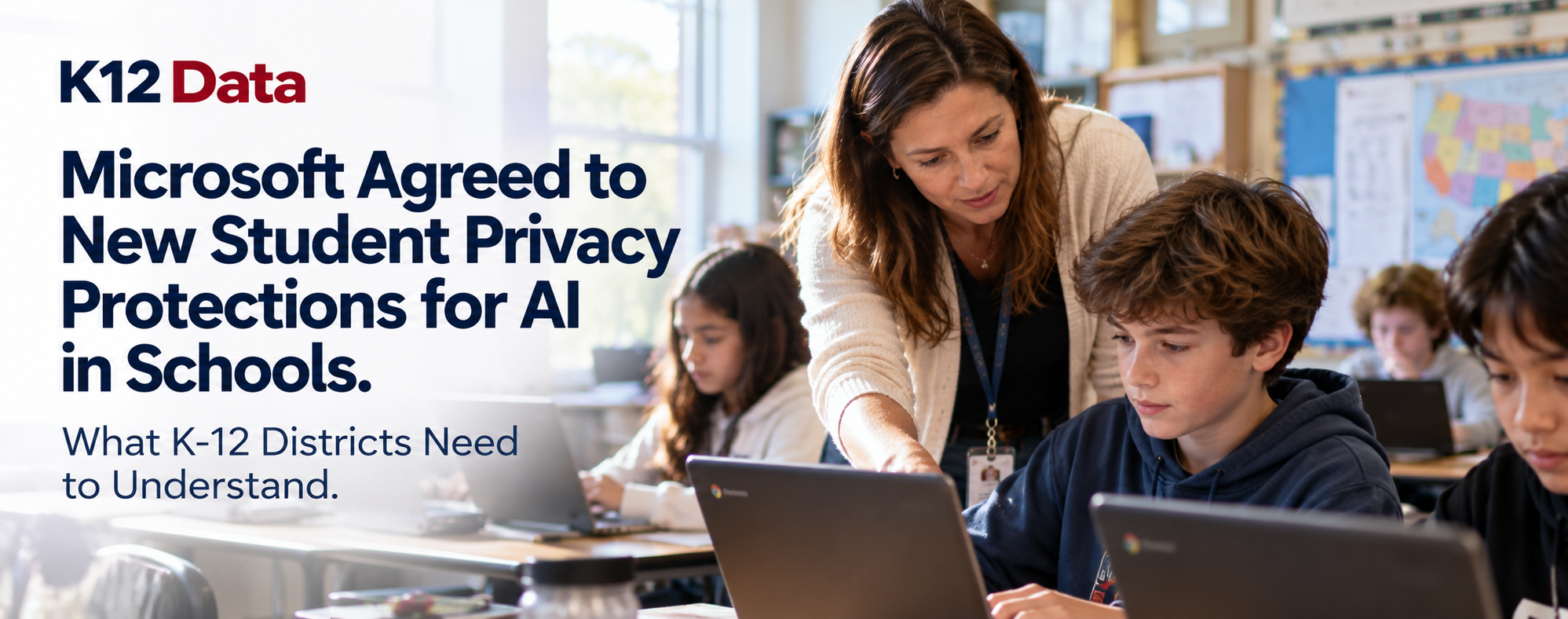
AFT, UFT, and Microsoft announced a contractually enforceable AI safety and privacy standard for schools, giving district leaders a ready-made template for vetting AI tools.
Teachers Unions and Microsoft Just Agreed on a National AI Safety Standard, and Districts Can Put It in Their Contracts
A Ready-Made Template for a Question Every District Is Asking
Every district technology office in the country has been fielding the same question this year: how do we say yes to AI without losing control of student data? On September 9, 2026, three of the most influential names in the conversation put a concrete answer on the table. The American Federation of Teachers, the United Federation of Teachers, and Microsoft announced a National AI Safety & Privacy Standard for schools, announced by AFT President Randi Weingarten, UFT President Michael Mulgrew, and Microsoft Vice Chair Brad Smith.
What makes this announcement different from the many AI principles documents circulating in education is the word enforceable. Districts can incorporate the protections directly into their Microsoft customer agreements, turning a set of good intentions into contract language a district can actually point to. A fact sheet and the full agreement text are publicly available for districts to review and adopt.
What the Standard Actually Covers
The agreement is organized around three priorities. The first is data protection. Student and educator data cannot be used to train AI models, sold, or repurposed, and schools keep control over how data is used, retained, and deleted. The second is safety. AI systems require human oversight and must avoid harmful or manipulative experiences, with strong security standards and accountability measures attached. The third is transparency and control. Families receive clear information about how AI is used and what data is collected, and schools gain the ability to terminate agreements and seek damages from violators.
Several specific prohibitions stand out. Student tracking is off the table. AI cannot make decisions without human oversight. Student-facing data cannot be used to train proprietary systems. For a district procurement team, that list reads like the checklist they were already trying to build from scratch.
Why This Gives Districts Real Leverage
For years, district leaders have negotiated technology contracts one vendor at a time, often without a shared reference point for what good looks like. A standard backed by a major national union and a major technology company changes that dynamic. It gives a superintendent, a technology director, or a school board a concrete benchmark: if one vendor has agreed to these terms, why wouldn't the next one?
The standard also builds on momentum that was already underway. It follows New York City's recent decision to restrict screens and AI for younger grades and aligns with frameworks already adopted by Los Angeles Unified School District and New York State United Teachers. Districts that have been waiting for the field to settle on common expectations now have several aligned reference points to draw from.
Who Inside a District Moves First
Announcements like this travel through a predictable set of roles. Technology directors and chief technology officers are the first to read the full agreement text, comparing it against their current vendor contracts. Data privacy officers and district counsel look at the termination and damages language. Curriculum directors and instructional technology coordinators ask which classroom tools would fall under the standard. Procurement staff start building it into upcoming RFPs, and school board members field questions from parents and teachers who read the headline.
Each of those roles is now actively reworking how AI tools get evaluated. That is a meaningful window for any organization that sells into K-12, whether the product is an AI-powered tutoring tool, a student information integration, a professional development program, or a privacy and compliance service. Districts are looking for partners who can show they already meet the standard, and the people making those calls are identifiable by title.
What Vendors Should Be Ready to Show
The practical advice for any company selling into districts is to get ahead of the questions. Be ready to document that student data is never used to train models. Be ready to explain how human oversight works in your product. Be ready to describe what a district can do if it needs to terminate and recover its data. Vendors who can answer those three questions in plain language, without a lengthy legal exchange, will move through district reviews faster than those who cannot.
It also helps to remember that adoption of a standard like this is a district-by-district decision. Some of the largest systems will move quickly. Many mid-sized and smaller districts will take a semester or two to review it with counsel and their boards. The conversations are happening on different timelines in different places, which is why reaching the right contact in each district, at the moment they are ready to talk, matters more than any single announcement.
How the Contract Language Changes the Negotiation
Contract enforceability is the detail district counsel will care about most. A policy statement tells a vendor what a district hopes for. A contract clause tells a vendor what happens if it does not deliver. Because the standard lets districts write the protections into their Microsoft agreements, termination rights and damages become part of the deal itself, not a side conversation. For a small district with limited legal staff, that is a meaningful advantage, since it can adopt language that a national union and a major vendor have already reviewed instead of drafting its own from nothing.
It also gives smaller districts a way to stand next to the largest ones. A rural district with a single technology coordinator does not usually have the leverage to rewrite a vendor's terms. A shared standard changes that. When many districts point to the same language, vendors have a strong reason to offer it consistently, and the districts with the fewest resources benefit the most from that consistency.
What Teachers and Families Will Notice
The transparency piece of the agreement is the part families are most likely to see. Parents who have wondered what an AI tool does with their child's information can expect clearer answers, delivered in plain language. Teachers, who have asked for a real say in how AI enters their classrooms, get human oversight written into the terms. For principals, who sit between teachers and families every day, having a documented standard to reference makes those conversations easier and more consistent.
That matters for adoption, too. Tools that families trust tend to get used, and tools that teachers trust tend to be used well. When the rules are visible and enforceable, the awkward early phase of any new technology, with its rumors and its worst-case assumptions, shortens considerably. Districts that communicate the standard clearly can turn a potential source of worry into a reason for confidence.
Questions Districts Should Be Asking Right Now
Leaders who want to act on this announcement can start with a short list of internal questions. Which of our current AI-enabled tools would be covered by language like this? Do our existing contracts already include data-use limits, or are there gaps? Who owns the review of new AI tools, and is that responsibility written down? How do we explain our approach to families in a single page? Districts that can answer these four questions are well prepared for whatever standard or state rule arrives next.
The answers will look different from one district to the next, and that is part of why the roles involved are so varied. A large suburban district may route everything through a dedicated privacy office. A small district may rely on one technology director and the superintendent. Understanding who actually holds the pen in each place is the first step for anyone who needs to be in the conversation.
A Healthy Sign for AI in Schools
It would be easy to read this as a story about restriction, but the more accurate reading is that it is a story about clarity. Districts that were hesitant to approve AI tools because the rules were unclear now have a framework that lets them approve tools with confidence. Teachers get a stronger voice in how AI shows up in their classrooms, and families get plain-language information about what is happening with their children's data. Clear rules are what allow responsible adoption to move forward faster.
The same pattern shows up elsewhere in education. As teacher preparation pathways diversify, for example, districts are rethinking how they find and evaluate candidates, a theme explored in this look at Arizona State's new three-year teacher degree. Higher education faces its own questions about AI governance, and the College Data FAQ is a useful starting point for understanding who makes those decisions on campuses.
Frequently Asked Questions
What is the National AI Safety & Privacy Standard for schools?
It is an agreement announced on September 9, 2026 by the AFT, the UFT, and Microsoft that sets contractually enforceable rules for AI in schools, covering data protection, safety safeguards, and transparency for families.
Can student data be used to train AI models under the standard?
No. Student and educator data cannot be used to train AI models, sold, or repurposed, and student-facing data cannot be used to train proprietary systems. Schools control how data is used, retained, and deleted.
Who inside a school district decides whether to adopt these protections?
Technology directors, chief technology officers, data privacy officers, district counsel, procurement staff, and the superintendent and school board typically review and approve contract language, with curriculum directors and instructional technology coordinators weighing in on classroom tools.
Reach the District Leaders Reviewing AI Contracts
K12 Data maintains verified, role-specific contacts for technology directors, chief technology officers, curriculum directors, superintendents, and the other decision-makers now reviewing how AI tools are approved. If you sell a product that fits this moment, build a targeted list and reach the right people while these contract conversations are open. You can also browse the K12 Data FAQ to see how our lists are built, or buy a school email list filtered to exactly the roles you need.