
 0
0

There are 0 items in your cart: Cart Subtotal: $ 0.00
Your Building Automation System Is Now a Cybersecurity Problem, and Facility Managers Are the New Frontline

 The K12 Marketplace
  0
0
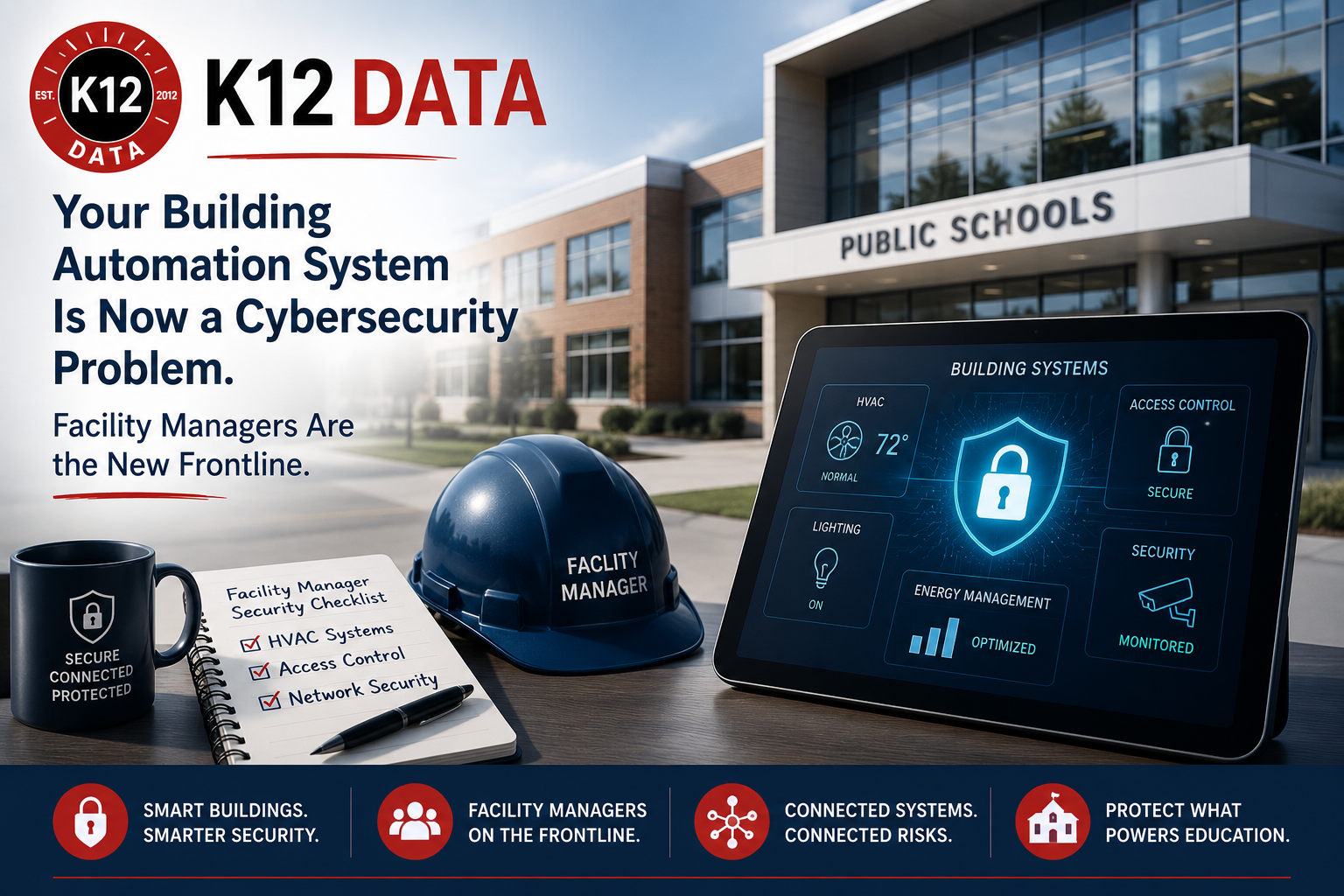
Cybercriminals are increasingly using building automation systems, HVAC, access control, lighting, to breach school district networks, making facility managers a genuinely new cybersecurity stakeholder.
Your Building Automation System Is Now a Cybersecurity Problem, and Facility Managers Are the New Frontline
The next serious breach of a school district's network may not start with a phishing email at all. It may start with a thermostat. CoSN, the Consortium for School Networking, has flagged a genuinely underappreciated risk directly: cybercriminals can use building automation technology, HVAC controls, access card systems, lighting and energy management platforms, as an entry point into a district's broader network, which means facility managers now need to be part of the cybersecurity conversation in a way most districts have never structured them to be.
This is not a hypothetical future risk. It is an active warning from the organization that represents K-12 technology leadership nationally, and it points to a genuinely new category of decision-maker that most vendor contact databases have never separately tracked, let alone reached with any specificity or urgency.
Why Building Systems Became a Real Attack Surface
Modern school facilities run on increasingly networked infrastructure. HVAC systems, access control and badge readers, lighting automation, and energy management platforms are frequently connected to the same broader network as instructional and administrative systems, sometimes with far less security hardening than the systems IT departments actively monitor and patch on a regular schedule. A facility management platform procured years ago, before network security was a central consideration in that specific purchasing decision, can represent a genuine, unmonitored gap in a district's overall security posture.
This is precisely the kind of vulnerability that traditional IT security training and awareness campaigns rarely address, since those campaigns are built around email, credentials, and endpoint devices, not building automation systems that facility staff, not IT staff, typically manage day to day. The result is a real coordination gap between two departments that have historically operated with minimal overlap.
Why Facility Managers Have Never Been Treated as a Security Stakeholder
Facility managers in most districts report through operations, not through the technology or IT function, and their core responsibilities, physical plant maintenance, energy efficiency, vendor coordination for building systems, have never traditionally intersected with network security planning. This organizational separation made sense when building systems ran independently of the broader network. It makes considerably less sense now that so much building infrastructure is networked and therefore represents genuine attack surface.
CoSN's warning specifically frames this as a coordination problem: facility managers need to be part of the security effort, working alongside IT rather than operating in a completely separate lane. This is a genuinely new expectation for a role that has never been asked to think about network security as part of its core function, and districts moving to close this gap are having to build new working relationships between departments that have not historically needed to coordinate this closely.
The Vendor Landscape This Creates
This shift creates real, near-term demand for a category of product and service that sits at the intersection of physical facility management and cybersecurity, network security assessment specifically scoped to building automation systems, facility management platforms built with modern security standards from the ground up, and training programs designed specifically for facility staff who have never previously needed cybersecurity awareness training as part of their role.
Vendors selling into this space need to understand that facility managers are not IT professionals and should not be pitched using IT-department language and assumptions. Effective outreach to this audience needs to translate cybersecurity risk into terms that connect directly to facility management's existing priorities, system reliability, vendor accountability, operational continuity, rather than assuming a level of technical security fluency this role has never previously needed to develop.
Why This Matters More for Smaller and Rural Districts
Larger districts with dedicated cybersecurity staff are better positioned to identify and address this gap proactively, even if doing so requires genuine new cross-departmental coordination. Smaller and rural districts, often managing facilities with a single operations director wearing multiple roles simultaneously, face a harder version of this problem, since they may have neither dedicated IT security staff nor dedicated facility management staff with bandwidth to take on a genuinely new security responsibility.
This creates a real opportunity for vendors offering accessible, appropriately scoped security assessment and monitoring tools specifically priced and designed for smaller districts, rather than defaulting to enterprise-tier security platforms built primarily around large district budgets and staffing levels that most smaller districts simply do not have available for this specific, newly emerging need.
What This Means for Contact Data Specifically
Reaching facility managers directly requires contact data that most K-12 databases have never prioritized as a distinct, trackable role, since facility management has not traditionally been treated as a technology or security decision-maker category worth separate tracking. Vendors serious about this emerging opportunity need a school district contact database that specifically identifies facility directors, operations managers, and building automation system administrators as their own distinct segment, correctly attributed and current, not folded generically into a broader "operations" category that obscures who actually owns this specific function at a given district.
This is exactly the kind of emerging role category that a static, infrequently updated database misses entirely, since facility management titles and reporting structures are actively evolving right now in direct response to this exact security conversation, in ways a database refreshed only annually simply cannot keep pace with, leaving vendors reaching out with outdated or generic operations-department contacts long after the actual decision-maker has already changed.
The Procurement Question Districts Have Never Asked
Building automation and facility management systems have historically been procured through a completely different process than IT and instructional technology, often managed by operations or facilities staff working directly with equipment vendors, with minimal or no involvement from the IT department that would normally vet a new system for network security implications. This procurement gap is precisely how so much building infrastructure ended up connected to district networks without the same security scrutiny applied to systems IT actively manages.
Districts serious about closing this gap need to bring facility system procurement under at least some shared review with IT, even if facilities retains primary ownership of the purchasing decision itself. This does not require eliminating facilities' purchasing autonomy, any more than closing a similar gap in other operational areas requires centralizing every decision under IT. It requires building a simple, consistent checkpoint specifically for any facility system that will connect to the district network, ensuring baseline security standards get applied before deployment rather than discovered as a gap only after a breach has already occurred.
What a Real Incident Looks Like in Practice
Consider a realistic scenario: a district's HVAC vendor provides remote monitoring and control software, allowing the vendor's technicians to diagnose and adjust building systems without an on-site visit for every routine issue. This is a genuinely useful, common feature that saves real time and cost. But if that remote access point is not properly secured, segmented from the district's broader network, and monitored the same way any other remote access point would be, it becomes a genuine entry point that has nothing to do with the district's email security training, password policies, or endpoint protection, since none of those measures touch a vendor's remote access into a building control system at all.
This is exactly the kind of gap CoSN's warning is pointing to, and it explains why facility managers, not just IT staff, need genuine security awareness specific to the systems they actually manage day to day. A facility manager who understands what to ask a building systems vendor about remote access security, encryption, and monitoring is closing a gap that no amount of traditional IT security training, aimed at email and endpoint behavior, would ever address.
Building the Cross-Departmental Relationship That Does Not Currently Exist
Districts making genuine progress on this issue are building structured, recurring communication between IT and facilities specifically around network-connected building systems, rather than leaving this coordination to happen informally or not at all. This does not need to be an elaborate governance structure. A quarterly review of which facility systems are currently network-connected, who manages remote access to each one, and whether that access has been reviewed for basic security hardening, is often enough to catch the most significant gaps without requiring a wholesale reorganization of how either department operates.
Vendors selling security assessment, training, or facility management platforms into this space should recognize that districts genuinely need help building this cross-departmental process, not just a point-in-time security audit. A vendor who can offer ongoing support for exactly this kind of recurring coordination, rather than a one-time assessment that leaves the district to figure out sustained follow-through on their own, is solving the actual, durable version of this problem rather than a single symptom of it.
A Related Pattern Across Sectors Facing New Security Stakeholders
This dynamic, where a previously non-technical operational role suddenly becomes a genuine security stakeholder due to increased system connectivity, is not unique to K-12 facilities. Higher education institutions can access practical resources directly, since College Data's FAQ page addresses many of the same underlying data quality and sourcing questions that apply to any vendor evaluating a genuinely new, emerging buyer category like this one. Healthcare organizations face a comparable expansion of who counts as a security-relevant stakeholder too, and Physician Data's glossary offers useful grounding in exactly the kind of terminology shift that accompanies a role like this one taking on new responsibility.
Government agencies are navigating a related coordination challenge from a different direction, since the DOJ's accessibility compliance deadline created a comparable new category of government decision-maker almost overnight, the same pattern now playing out with K-12 facility managers. And education hiring shows a related dynamic too, since reaching the right candidate directly, rather than depending on outdated assumptions about where a role sits organizationally, depends on exactly the same underlying data currency standard.
Facility managers did not ask to become cybersecurity stakeholders, but the increasing connectivity of building automation systems has made that role a genuine, current security responsibility whether districts have formally recognized it yet or not. Vendors who can reach this specific, newly emerging decision-maker with accurate contact data and messaging that respects their actual professional context, rather than generic IT-department language, are positioned to build real relationships in a category most competitors have not identified as a distinct target yet. The districts building genuine coordination between facilities and IT now, rather than waiting for an actual breach to force the issue, are the ones most likely to avoid becoming the next headline about a school district network compromised through an unlikely, overlooked entry point.
Ready to reach the facility managers and operations directors navigating this new security responsibility? Build a verified K-12 database, or buy a school email list, with K12 Data today.